
How to appear in ChatGPT (and how to measure whether you already do)
When ChatGPT searches the web, it relies on external search providers and on its OAI-SearchBot crawler; according to OpenAI, if you block it in robots.txt your website will not appear in its search answers. For it to cite you, you need four things: open access for crawlers, pages that answer with specific data (prices, timescales, steps), the same business information everywhere and mentions on third-party websites. You measure it with the visits that come from chatgpt.com and with a fixed list of questions you repeat every month.
1 / 12Why ChatGPT cites some websites and not others
How to appear in ChatGPT when someone asks about what you sell is the question we have been hearing most for months. There is no trick and no paid button: you have to let its crawlers in, publish answers that can be cited, have a clear business identity and get others to talk about you. Here are the steps in order, why your brand may not be showing up and how to measure it without expensive tools.
Why ChatGPT cites some websites and not others
The first thing is to drop the idea that ChatGPT «knows» things about your business. When it answers «which agency would you recommend in Mataró» or «how much does a bathroom renovation cost in Barcelona», it usually runs searches at that moment, reads pages and writes its answer from them.
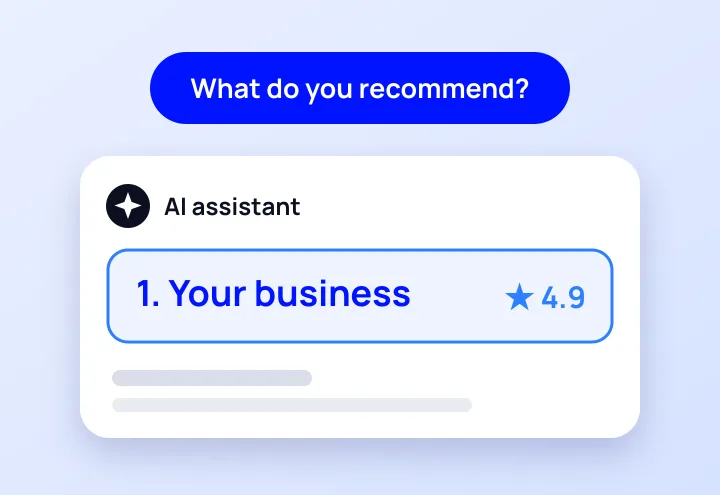
Where those pages come from: when OpenAI launched ChatGPT search, it explained that it relies on third-party search providers and on content from its partners. And according to its crawler documentation, OAI-SearchBot is the one that goes through websites to show them in those answers.
If your robots.txt blocks it, you do not exist for ChatGPT search, however well you rank on Google. It is the most expensive silent mistake: many of these blocks were added with a copy and paste, without anyone deciding to.
What makes a page get cited: out of all the pages it reads, the model keeps the ones that give it the answer. A paragraph that says «between €800 and €1,500» can be cited. One that says «it depends on many factors» is no use for writing anything.
«ChatGPT does not remember your business: it looks it up at that moment. If its crawler cannot get into your website, it does not matter how well you rank on Google.»
GNERAI team
Nobody outside OpenAI knows exactly how it chooses which sources to cite, and it changes often. What follows is what its documents say and what we see working, not a guaranteed formula.
Step 1: let AI crawlers in
This is the urgent part, because without it nothing else works. Open your robots.txt (yourdomain.com/robots.txt) and check what it says about these crawlers. This is what each company explains in its documentation:
| Crawler | Owner | What it is for, according to its documentation |
|---|---|---|
| OAI-SearchBot | OpenAI | Showing websites in ChatGPT search answers. If you block it, you do not appear in them. Changes take about 24 hours to apply. |
| GPTBot | OpenAI | Crawling content that may be used to train its models. Blocking it signals that you do not want your content used for training. |
| ChatGPT-User | OpenAI | Visiting a page when a user asks for it in a conversation. It does not decide whether you appear in search. |
| PerplexityBot | Perplexity | Showing and linking websites in its results. Perplexity recommends allowing it. |
| Google-Extended | Deciding whether your content is used to train Gemini and to ground its answers in the Gemini app. It does not affect your presence or your position in Google Search. |
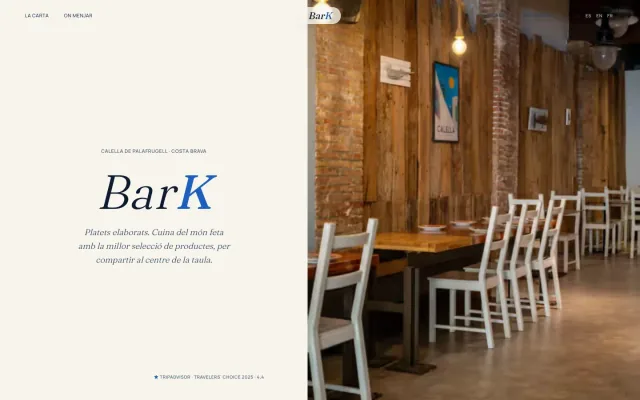 Real exampleBark CalellaMultilingual website and interactive digital menu for a small-plates restaurant on the Costa Brava.4.5★ average rating on GoogleSee the project →
Blocking training (GPTBot) and allowing search (OAI-SearchBot) is a valid choice: OpenAI treats them separately. What makes no sense is blocking search by accident. If someone else built your website, ask them to show you the file.
Step 2: publish answers that can be cited
With the door open, the next thing is to give it something to cite. This is what we see working on the pages that appear most:
- A direct answer at the top: the question and the key fact in a paragraph of 40 to 60 words.
- Specific data: price ranges, timescales, numbered steps, the areas you cover.
- Real frequently asked questions, the ones people ask you on the phone, with short answers.
- Who wrote it and when it was last updated. A page dated three years ago inspires little confidence.
- One page per service, not a generic list of everything you do.
If you are only going to do one thing, publish guide prices with a direct answer above them. It is one of the most frequently asked things and one of the least published.
Step 3: make your business easy to recognise
To recommend you, AI has to be sure of who you are, what you do and where. If your website shows one address, your Google Business Profile another and a directory an old phone number, you are giving it reasons to doubt.
- The same name, address and phone number on your website, on Google Business Profile and in directories.
- An «about us» page with people, location and what you do.
- Structured data for your business (Organization or LocalBusiness) that matches what is shown on the page. Google makes clear that no special markup is needed to appear in its AI features, but it helps keep your data consistent.
- A complete Google Business Profile, with categories, services, opening hours and photos. We explain it in local SEO and Google Business Profile.
Step 4: get others to talk about you
This is the slow part and the one that carries most weight when someone asks «who would you recommend». Having a page of yours cited is not the same as being recommended: to recommend, AI looks at what others say.
- Directories in your sector and supplier comparison sites, with a complete, up-to-date listing.
- Local press and the websites of associations or trade bodies in your area.
- Collaborations with other businesses that link to your website.
- Real reviews on Google, all of them answered. Never bought.
How to appear in ChatGPT answers for buyers
Not all questions are worth the same. The ones that end in a customer usually take three forms, and each one is worked on with a type of page:
| What the buyer asks | Which page you need |
|---|---|
| «Best [service] in [area]» | Service page by area, reviews and mentions in directories |
| «How much does [service] cost» | Prices page with real ranges and what they include |
| «[Option A] or [option B]» | An honest comparison guide, even if it recommends the other option |
If you sell services or are a B2B company
In B2B the question is usually more technical: «[product] supplier for companies in the [sector] sector», «software for [task]». It helps to have case studies with figures, pages by sector and public documentation of what you do. A real case study with numbers is one of the most citable things there is.
Why your brand does not appear in ChatGPT
If you ask about your sector and your competitors come up but you do not, it is almost always for one of these reasons, from the easiest to the slowest to fix:
- Your robots.txt blocks OAI-SearchBot, or your website does not load properly for crawlers without JavaScript.
- Your website does not answer the question: there are no prices, no area and no page per service.
- Your website does not rank well in the search engines AI draws on. Without healthy SEO there is nothing to cite.
- Your details do not match between your website, Google and directories.
- Nobody talks about you outside your website: without directories, reviews or mentions, AI recommends whoever does have them.
And a warning: be wary of anyone who guarantees you will come first in ChatGPT. Nobody controls those answers. We go over what does not work (or has not been proven) in SEO for AI.
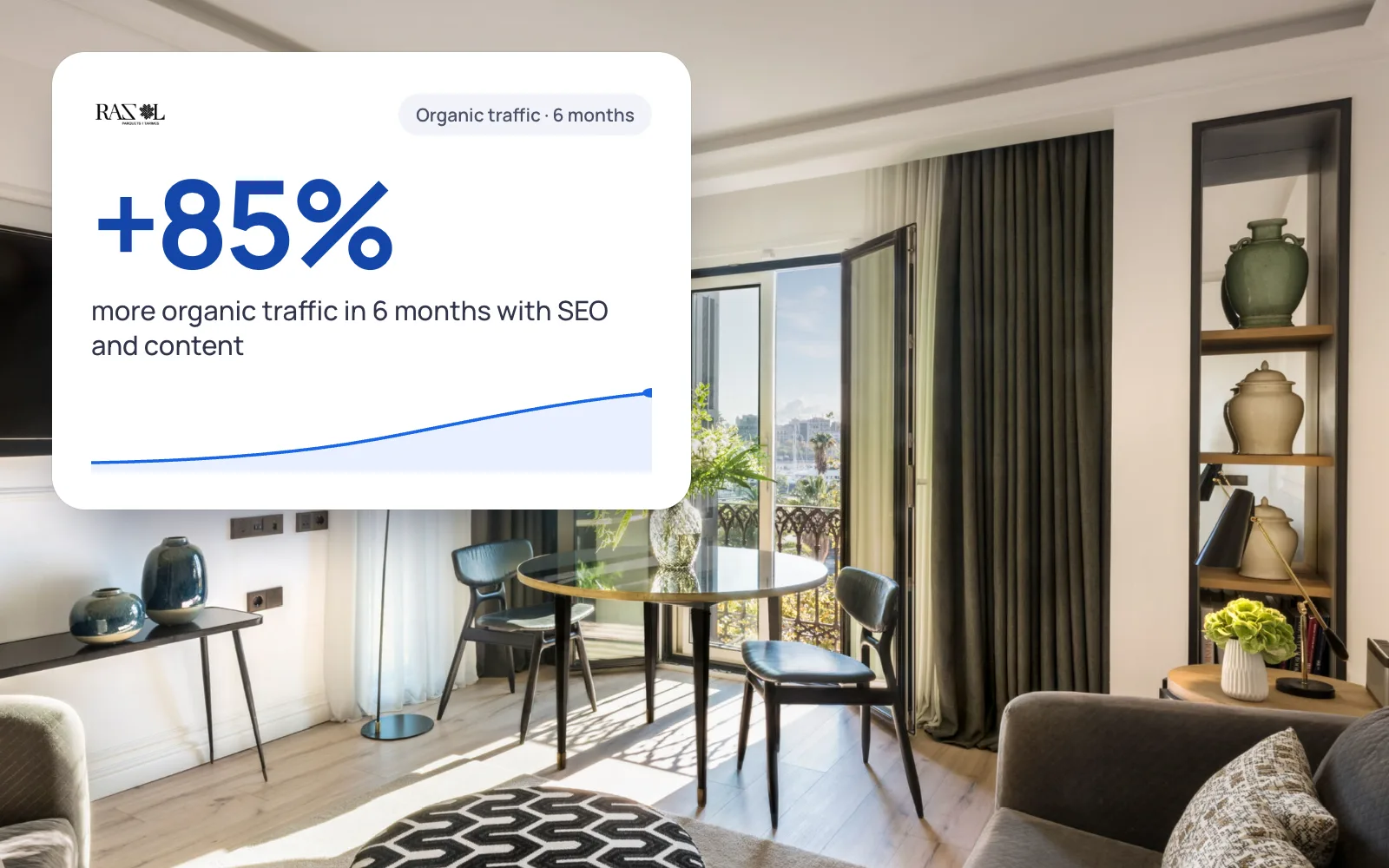 A real case+85%organic traffic in 6 monthsRazol Parquet · See the project →
ChatGPT, Gemini, Perplexity and AI Overviews: not the same thing
They look alike, but they draw on different sources:
Google AI Overviews and AI Mode
According to Google, there are no additional requirements to appear. The page has to be indexed and eligible to be shown on Google with a snippet. It is your usual SEO.
ChatGPT
It searches with external providers and its own crawler, and instead of ten links it gives two or three recommendations. Being one of them is worth more than a click.
Perplexity
It shows linked sources in every answer and crawls with PerplexityBot.
Gemini
Its app can ground answers in content from the Google index; Google-Extended controls whether your content is used for that and for training.
The practical consequence: SEO is the foundation of everything, and what is specific to each assistant is built on top of it. We explain it in more detail, along with how we work on it, in SEO for AI (GEO).
How to measure whether you appear in ChatGPT
There is no point working on it if you do not know whether it works. There are four ways to measure it, and all of them are free:
1. Visits that come from ChatGPT
OpenAI explains that it adds the utm_source=chatgpt.com parameter to the links it sends to websites. In Google Analytics 4, go to Acquisition and filter by the source chatgpt.com. Each visit is someone who asked, received your link and clicked.
Also look at perplexity.ai, gemini.google.com and copilot. Not every link carries the tag, so treat the figure as a minimum.
2. Measure how often your brand appears in the answers
Make a list of ten to twenty questions your customer would ask («best [service] in [area]», «how much does [service] cost in [area]») and run them once a month, always the same ones, in a window with no history.
Note whether you appear, in what position in the answer, with which page and who it cites instead of you. Answers change between sessions, so one screenshot proves nothing; three months of data does.
3. Search Console, for the Google side
According to Google, traffic from AI Overviews and AI Mode is counted within the overall web search total, with no separate report. What you can see is a pattern: impressions that rise while clicks stay flat on informational queries.
4. Bing Webmaster Tools, for Copilot
Since February 2026 Microsoft has offered, in preview, an AI performance report showing how many times your website is cited in Copilot and in Bing's AI summaries. Bear in mind that a citation is not a click.
Our own case: what happened at gnerai.com
So that this is not just theory, here is our own scorecard, the good and the bad. In our October 2026 tracking, ChatGPT cited five gnerai.com pages as a source when answering questions about our sector.
What we did: AI crawlers open from the start, direct answers at the top and guides that end with specific prices and frequently asked questions.
 Real exampleSEES ProductionAn editorial online presence for a high-end audiovisual production company.+140% time on siteSee the project →
What we did not get: when asked directly about agencies in the area, it still did not recommend us, while it did recommend some competitors, largely thanks to directories. That is the difference between having good content and being a recognised brand.
The lesson is twofold. The technical and content side is solved in a few weeks and you notice it. The reputation side (directories, reviews, others talking about you) is slower and there is no way to skip it. We are right at that point, and we say so because it is where almost everyone is.
Checklist: what to do this week and what to leave for later
- Check your robots.txt: OAI-SearchBot and PerplexityBot allowed, unless you have a reason not to.
- Put a direct answer at the top of your main pages.
- Publish guide prices or a «from» price.
- Make your name, address and phone number the same on your website, Google and directories.
- Add structured data for your business that matches the page.
- Prepare your list of fixed questions and write down your starting point.
- Create a GA4 report with visits from chatgpt.com and other assistants.
- Start working on mentions: directories, local press, real reviews.
If what interests you is the other side of the board, advertising inside ChatGPT rather than appearing in its answers, we cover it in ChatGPT Ads in Spain.
We'll send you our next SEO guide
What's changing in Google and what works for our clients, explained for small businesses. No spam.
Guides for your business, in your inbox
What we publish on websites, SEO, ads and AI for small businesses. No spam, unsubscribe in one click.
Frequently asked questions
How do I get ChatGPT to recommend my business?
You cannot pay for it or game it. Let its OAI-SearchBot crawler in, publish pages that answer with specific data (prices, timescales, area), keep the same business information on your website, Google and directories, and get other websites to mention you. The technical side is quick; reputation takes months.
How do I know whether my company appears in ChatGPT and Gemini?
In two ways. In Google Analytics, filter visits by the sources chatgpt.com and gemini.google.com. And every month run a fixed list of your customer's questions in a window with no history, noting whether you appear, in what position and with which page. In three months you will see the trend.
Why does my website not appear in ChatGPT?
The most common causes: robots.txt blocks OAI-SearchBot, the website does not answer the question (no prices and no pages per service), it does not rank well, the business details do not match between website, Google and directories, or nobody talks about you outside your website.
What is SEO for AI, or GEO?
It is the work of getting your business to appear and be cited in the answers of assistants such as ChatGPT, Gemini, Perplexity or Google's AI Overviews. It is also called GEO, from Generative Engine Optimization, or AI SEO. It starts from traditional SEO and adds crawler access, citable content and mentions.
Is appearing in ChatGPT the same as appearing in Google's AI Overviews?
No. According to Google, for AI Overviews it is enough for the page to be indexed and eligible to be shown with a snippet: it is your usual SEO. ChatGPT searches with external providers and its own crawler, and instead of a list it gives two or three recommendations. They are worked on in a similar way, but measured separately.
What is OAI-SearchBot and do I have to let it in?
It is the crawler OpenAI uses to go through websites and show them in ChatGPT search answers. According to OpenAI, if you block it in robots.txt you do not appear in them, and changes take about 24 hours to apply. Unless you have a reason not to appear, it is worth allowing it.
How long does it take to appear in ChatGPT?
Opening access to crawlers takes hours. Getting your pages cited depends on them ranking well and answering with data, and usually takes weeks. Being recommended as a brand depends on mentions and reviews, and takes months. Nobody can guarantee it.
Can you pay to appear in ChatGPT?
Not in the answers. What does exist is advertising inside ChatGPT: labelled ads that, according to OpenAI, appear below the answer without changing it. They are two different things: one is earning the recommendation and the other is buying a space. We explain it in our ChatGPT Ads guide.
Further reading
What does AI say about your business?
Ask for the free SEO audit. We check whether ChatGPT cites you, with what information and against whom, as well as your website and your Google Business Profile, and within 24 hours we tell you what to prioritise.