Rebranding: what it is, when to renew your brand and when not to
Rebranding is the renewal of a company’s brand: its name, its logo, its visual identity, its tone or its positioning. It makes sense when there is a mismatch between what the company is and what it conveys: you have grown, changed your offer or your customer, or your image has fallen behind the competition. It does not make sense if you are simply bored of the logo. Most small businesses do not need to start from scratch: an evolution that keeps what their customers already recognise is enough.
1 / 10What rebranding is (and what it is not)
Rebranding means renewing your company’s brand so that it once again tells people who you are today. It is not changing the logo because you have grown tired of it: it is a business decision, with its moment and its risk. In this guide we explain what it is, the signs that your brand needs it, when it is better to leave it alone, what degrees of change there are and how to do it step by step without losing the customers who already choose you.
What rebranding is (and what it is not)
Rebranding is the process of renewing a brand’s identity (its name, its logo, its visual identity, its tone or even its values) so that it once again represents what the company is and where it is heading.
It can be a subtle touch-up or a complete change, but it always starts from the same question: does what people see of you still tell the truth about your business?
What it is not: an aesthetic whim, a way of “doing something” when sales drop, or a substitute for fixing the product. A brand does not expire after five or ten years. It is renewed when it stops representing what you are.
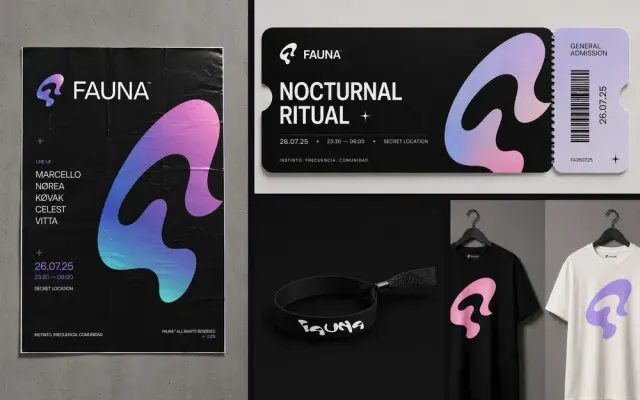
«Renewing your brand is not a matter of the calendar but of mismatch: you do it when your brand stops telling people who you are today.»
The GNERAI team
Branding and rebranding: how they differ
Branding builds a brand from scratch: strategy, name, identity and tone. Rebranding starts from a brand that already exists and already has something valuable, even if it does not look like it: customers who recognise it, reviews, a shop sign that people in the neighbourhood know, Google searches for your name.
That is why a rebrand is more delicate than new branding: as well as designing, you have to decide what to keep and how to handle the transition.
Signs that your brand needs a rebrand
It is rarely just one thing; it is usually several added together. If you recognise yourself in two or more of these, it is worth considering seriously:
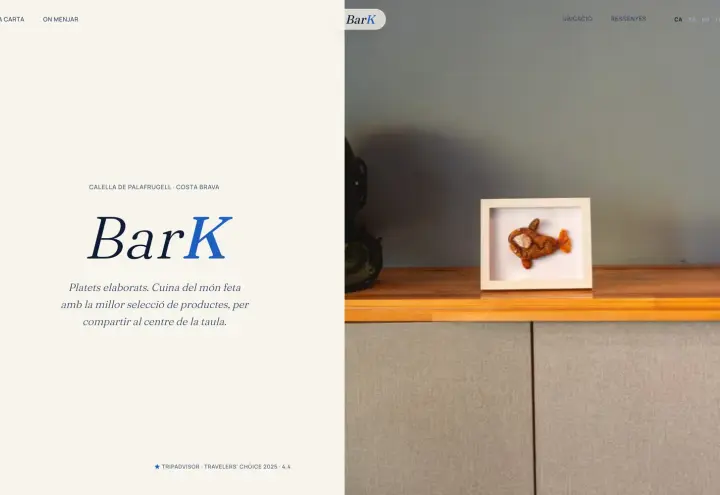
- It no longer reflects what you do. You have grown or changed your offer and the brand stayed where you were before.
- You look dated next to competitors who have evolved.
- You have to explain the brand in every meeting. If your sales team always starts with “actually, we do more than that”, the brand no longer speaks for itself.
- Every channel looks like a different company. The website, social media and quotes do not match each other.
- You carry a perception from the past that you want to distance yourself from: another stage, another owner, a problem you have already solved.
- You are about to make a leap: a new audience, another price range, an expansion. Your current brand is too small for you.
- Your name holds you back. It carries the name of a town when you already work across Catalonia, or of a product that is no longer your main one.
Rebranding for companies that have grown
It is the most common case among small businesses: the business started with a logo made in a hurry, it worked, it took on staff and today it wants bigger customers or a higher price. The company has moved up a league and the brand is still in the old one.
Here rebranding is not about aesthetics: it is about the image no longer counting against you when a customer compares quotes.
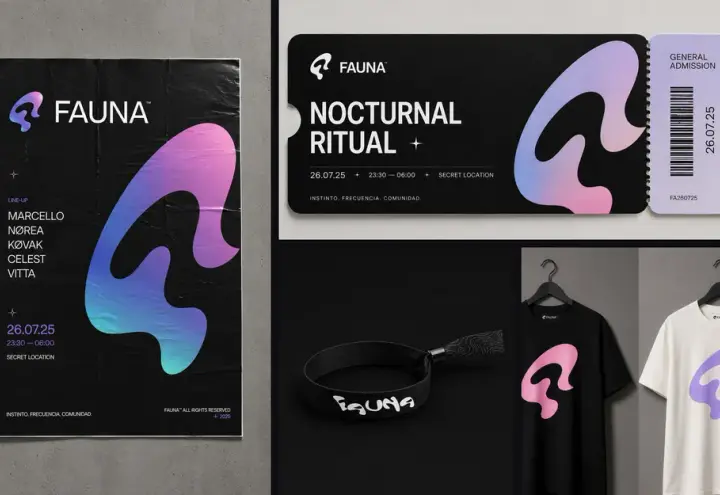
When you should NOT rebrand
Being honest here saves money and grief. Do not rebrand out of boredom, because of a trend or because the logo “feels tired”. You see your brand every day; your customers do not. What bores you gives them confidence.
Your brand has accumulated value in recognition and recall that you throw away if you change it for no reason.
Nor should you use rebranding as a sticking plaster for deeper problems. If what is failing is the product, the service or a website that does not convert, changing the logo does not fix it: it only papers over it.
And if the problem is an outdated website with a brand that does work, what you need is a website redesign, not a new brand.
Sometimes you do not need a new brand, but to define the one you already have properly: clear usage rules, a fixed palette and a brand guidelines manual that the whole team follows. It costs a good deal less and fixes much of the inconsistency.
Types of brand rebranding: from a touch-up to a total change
Rebranding does not always mean wiping the slate clean. There are degrees, and choosing the right one is half the battle:

| Degree | What changes | When it makes sense | Risk |
|---|---|---|---|
| Restyling or facelift | The logo is modernised, colours and typefaces are refined. The essence stays. | The brand works but looks old or does not adapt well to screens. | Low |
| Partial rebrand | A new visual identity and a new message on the same name. | You have changed your audience, price or offer and want it to show. | Medium |
| Total rebrand | Positioning, identity and, sometimes, the name. | Mergers, a change of ownership, a name that limits you or a reputation that weighs you down. | High |
Most small businesses do not need the radical change, but an evolution that updates their image without losing what people already recognise them for. First you decide the strategy (who you are, who you are addressing, what sets you apart) and, from there, how much needs to change. Design is the consequence, not the starting point.

Logo rebranding: how much to change
Before redesigning a logo, take stock of what people recognise in it: the colour? The shape of the symbol? The typeface of the name? Those are your assets. A good logo rebrand usually keeps at least one of them so that customers still identify you at first glance. Changing all three at once is starting from scratch, even if the name stays the same.
Rebranding with a change of name
Changing your name is the most expensive decision of all, because it affects the website, the domain, Google, contracts and your customers’ memory. It only pays off if your current name is genuinely holding you back.
If you are considering it, start with our guide to naming: how to choose your business name and check trademark registration and domain availability before you fall in love with an option.
Rebranding examples that teach something
Big-brand rebrands are studied because, for better or worse, they happen in public. Three that are useful for a small business:
- Gap (2010): the one that did not last a week. The clothing brand swapped its classic logo for a new one and, after a flood of criticism on social media, went back to the old one in less than a week, as reported by CNN Money. The lesson: changing something very recognisable without explaining why or giving customers time comes at a cost.
- Dunkin' (2019): removing what limits you. Dunkin' Donuts dropped “Donuts” from its name to reflect that it already sold much more than doughnuts, as its chief marketing officer explained to Business Insider. It kept its colours and typeface, so customers still recognised it. The lesson: if your name falls short, you can change just enough.
- Facebook → Meta (2021): separating company and product. In October 2021 the company changed its name to Meta, but the app kept the name Facebook. The lesson: sometimes the rebrand is of the company behind it, not of the product people use.
Rebrands of small brands: what we see in small businesses
At a small business, a rebrand rarely makes the news, but the reasons are the same. A building company that started with small repairs and now does full renovations. A firm that merges with another and has to choose which name stays.
A shop that was born with the name of its street and today sells online across Spain. In all three cases the brand was designed for a company that no longer exists.
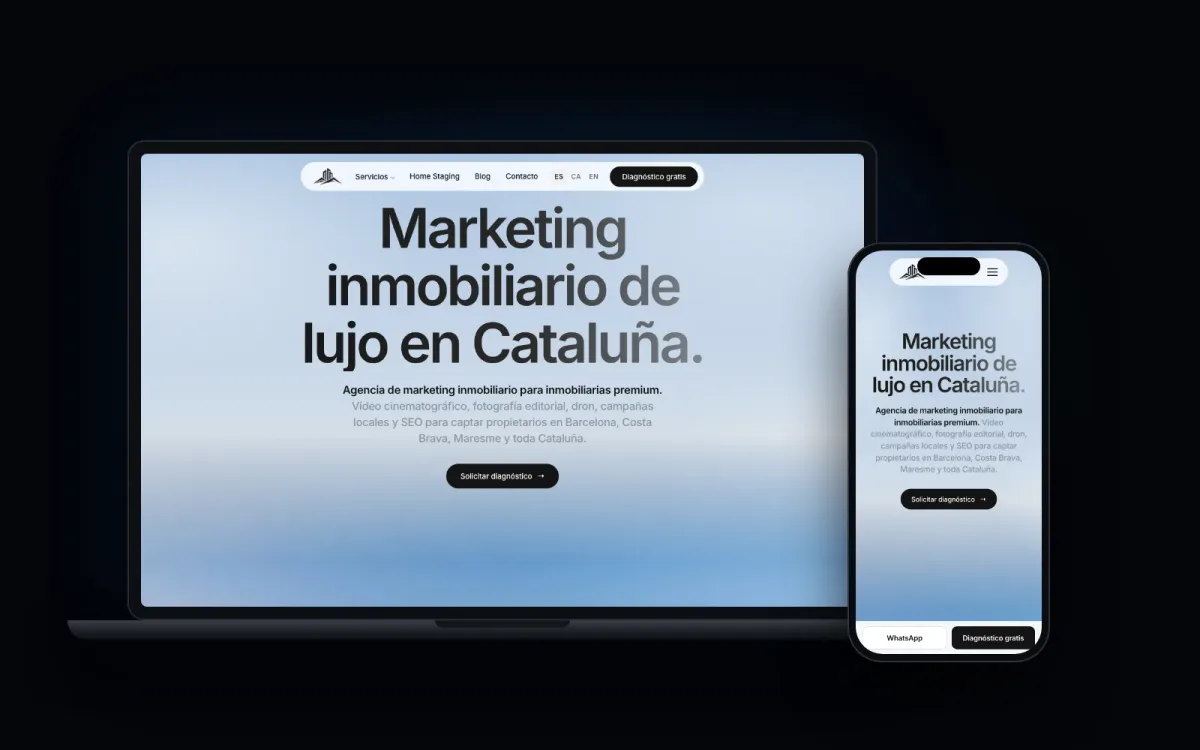
Rebranding in construction, industrial and technical services companies
These are sectors where many brands were created years ago and almost all of them look alike: a hard hat, a house, a spanner, blue and orange. A well-focused rebrand makes a big difference there, because the customer compares three quotes and the image is the first thing they judge.
What matters is that the new brand looks just as good on a van, a site hoarding or a PDF quote as on the website.
How to rebrand step by step
- AssessmentReview how people see you today: ask customers, look at your reviews, compare your image with your competitors’. Look for the specific mismatch, not a feeling.
- Asset inventoryWrite down what people recognise in your brand (colour, symbol, name, slogan) and what adds nothing. The former is protected.
- StrategyDefine who you are addressing now, what sets you apart and what the brand has to convey. In writing, on one page.
- Degree of changeWith the strategy in front of you, decide whether a restyle is enough or something deeper is needed.
- Identity designLogo, colours, typefaces and graphic system, tested on real applications and not just in a presentation.
- Guidelines and templatesUsage rules and files ready so the team does not have to improvise.
- Transition planA list of every medium where the brand appears, with an order and dates for changing them.
- Launch and explanationTell your customers why you are changing. A change that is explained is understood; a silent one confuses.
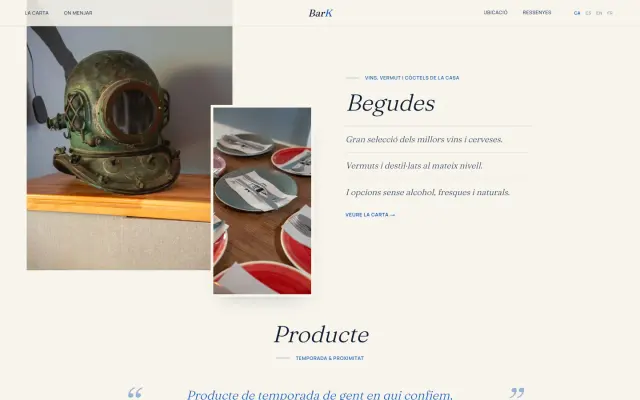
Digital rebranding: what needs to change online
Today most of your customers see your brand for the first time on a screen. That is why digital rebranding is the part that shows most and the part most often forgotten. Before the launch, have ready:
The website
Logo, colours, typefaces, favicon and photos. If you change domain, 301 redirects from every old URL to the new one so you do not lose Google rankings.
Your Google Business Profile
Name, logo, cover and photos. If you change your name, update it on the website and in directories too so that everything matches.
Social media
Profile picture, cover, username if it changes and post templates.
Ads
New creatives on Google Ads and Meta Ads on the same day as the change, so you do not pay for clicks with the old brand.
Email signature, quote and invoice templates
They are what your current customers see most and what gets forgotten first.
How to do it without losing those who already choose you
The biggest fear when renewing a brand is confusing the customers who already know you. It is a real risk, but it can be managed: keep the elements that make you recognisable, make the change across all channels at once and explain why instead of turning up one day as a different company.
A well-run rebrand does not erase your history, it updates it: it confirms to those who already chose you that your company is alive and has taken a step forward.

How much a rebrand costs and how long it takes
It depends on the degree of change. A restyle is similar in scope to a visual identity; a total rebrand with naming is a full project. At GNERAI, a visual identity starts at €1,000 and we quote rebranding with a fixed proposal after seeing your current brand, because touching up a logo does not cost the same as changing a name.
You will find market ranges and what each phase includes on our branding for small businesses in Barcelona page.
The cost almost nobody budgets for: the roll-out
The design is only part of the bill. Before you decide, also work out what it costs to change the brand in the real world:
- Signs, shop window vinyls and vehicle livery.
- Stationery, business cards, uniforms and packaging that will need reprinting.
- The website and digital templates.
- Trade fair material, banners and sales presentations.
- If you change your name: domain, trademark registration and paperwork.

To avoid doing everything at once, prioritise what new customers see (website, Google Business Profile, social media) and use up printed material in an orderly way, with a deadline. What you should avoid is living with two brands at the same time for months.
What you gain from a well-done rebrand
When it responds to a real need and is carried out with judgement, renewing your brand shows. A brand aligned with what you are builds more trust at first contact, stands out better from the competition and lets you stop competing on price alone. People take you more seriously, remember you and recommend you more easily.
Do not expect miracles: a new brand does not make up for poor service. But if your business is good and your image does not show it, rebranding is one of the investments that shows fastest in how people perceive you.
If you are interested in the visual side in detail, see what a corporate identity is and what elements it has.
Is it time to renew your brand? We tell you whether it is really needed
At GNERAI we help small businesses in Barcelona and the Maresme with branding and rebranding, but we start with what matters: knowing whether your brand really needs renewing or just needs defining better.
If it is time to renew it, we do it from the strategy up, making sure you do not lose what people already recognise you for, and we apply it to the website within the same team. If you are in the Maresme, you can also see our branding in Mataró service.
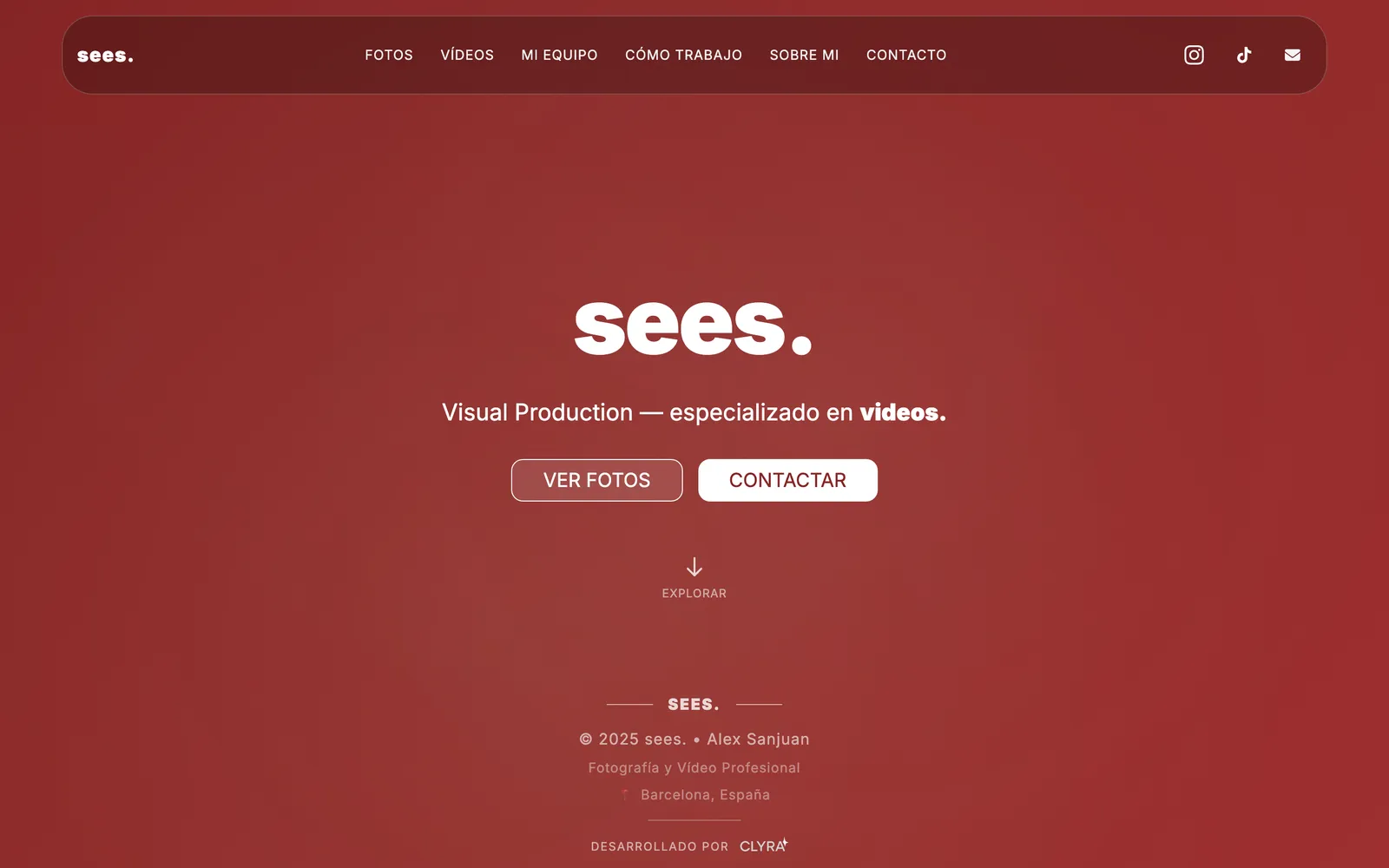
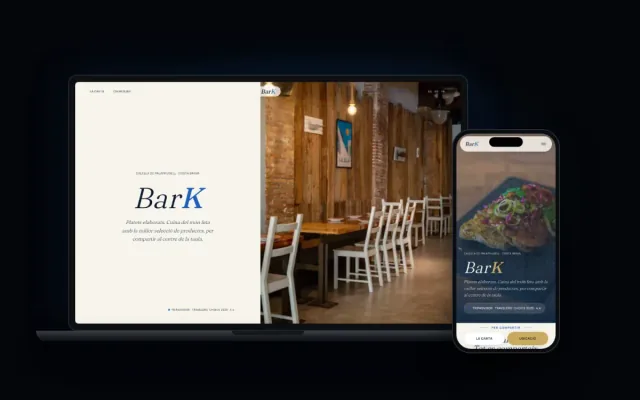
More real examples: SEES Production
We'll send you our next branding guide
Naming, identity and small-business brand examples whenever we publish. No spam.
Guides for your business, in your inbox
What we publish on websites, SEO, ads and AI for small businesses. No spam, unsubscribe in one click.
Frequently asked questions
What is rebranding?
It is the process of renewing a company’s brand (name, logo, visual identity, tone or positioning) so that it once again represents what the company is today. It can range from a simple logo restyle to a total change with a new name. It is done when there is a mismatch between what you are and what you convey.
What is a rebrand?
Rebrand is the short form of rebranding: changing or renewing a brand. In practice the two are used the same way. When someone says a company “has done a rebrand”, they mean it has changed its logo, its visual identity, its name or its positioning, or several of those things at once.
What does rebranding mean?
Literally, “making the brand again”. The term comes from the English word brand with the prefix re-. In marketing it is used for any renewal of a company’s identity, from updating the logo to changing the name and positioning completely.
How do you rebrand?
Start with an assessment of how people see you today, take stock of what people recognise in your brand and define the strategy in writing. With that you decide the degree of change, design the identity, prepare guidelines and templates, and plan the transition so you change every medium in order and explain the change to your customers.
What is the difference between branding and rebranding?
Branding creates a brand from scratch. Rebranding renews one that already exists and already has some value: customers who recognise it, reviews, searches for your name. That is why, as well as designing, a rebrand requires deciding what to keep and how to handle the transition without confusing anyone.
How long does a rebrand take?
A restyle or a visual identity can be ready in a few weeks. A full rebrand with strategy and guidelines takes longer, and if it includes a change of name, longer still because of the trademark and domain checks. On top of that comes the roll-out: website, signs, stationery and social media. The dates are always in the proposal.
Do you have to change your name when you rebrand?
No. Most small business rebrands keep the name and renew the visual identity and the message. Changing your name only pays off if your current one genuinely limits you: it describes something you no longer do, it gets confused with another company or it carries a reputation you want to leave behind.
How much does a rebrand cost for a small business?
It depends on the degree of change. At GNERAI a visual identity starts at €1,000 and rebranding is quoted with a fixed proposal after reviewing your current brand. Also factor in the roll-out: signs, stationery, vehicles and the website, which sometimes cost as much as the design.
Further reading
Has your brand fallen behind?
Take the free digital check-up in 2 minutes and in less than 24 hours we give you an honest assessment: whether your brand needs a rebrand, just a touch-up or nothing at all.