
Link building: what it is and how to get quality links for your SME
Link building is the part of SEO that gets links from other websites to yours in order to gain authority in Google’s eyes. For an SME, the best ones come from real relationships: associations and trade guilds, suppliers, local press, sponsorships and reputable directories in its sector. Buying links to rank goes against Google’s spam policies. It is measured in Search Console: who links to you and which pages climb.
1 / 8What link building is and why Google cares about it
Link building is the work of getting other websites to link to yours. For Google, every link from a relevant website is a small recommendation, and in competitive sectors it often makes the difference between page 1 and page 2. In this guide we explain which links are worth having, how to get them as an SME in Barcelona or the Maresme without paying for them, which shortcuts end in a penalty and how to tell whether it is working.
What link building is and why Google cares about it
Link building literally means building links. A link is any text or image on another website that takes you to one of your pages when you click on it. Since its early days, Google has used those links for two things: discovering new pages and understanding which pages deserve more trust.
If many relevant websites in your sector point to yours, Google takes it to mean you have something useful.
Think about how you choose a plumber in Mataró. If your neighbour, the building manager and the local hardware shop recommend one, you trust them. If a hundred strangers on a forum recommend one, not so much. Google works in a similar way: it does not count links, it weighs them.
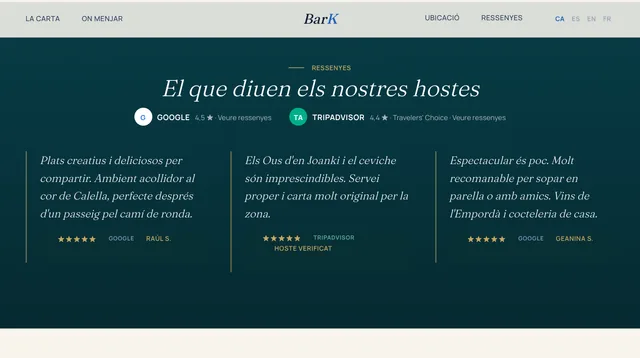
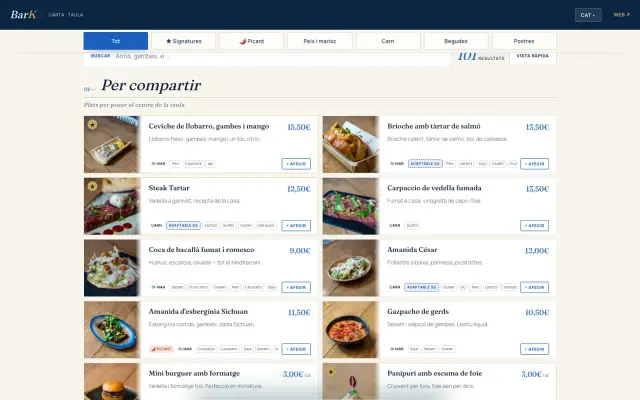
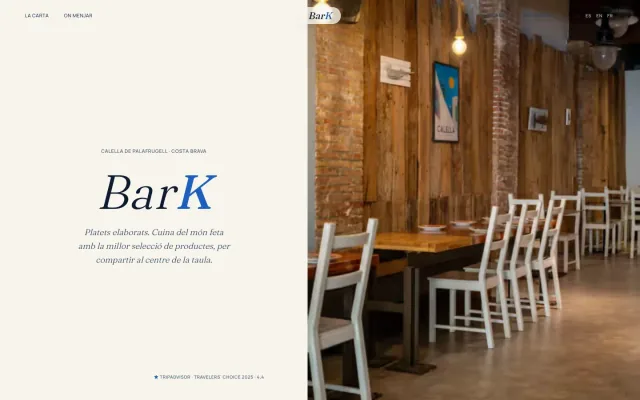 Real exampleBark CalellaMultilingual website and interactive digital menu for a small-plates restaurant on the Costa Brava.4.5★ average rating on GoogleSee the project →
Link building is one part of off-page SEO, which also includes mentions, reviews and your presence in directories. Here we focus only on links: where to get them and how to do it without risk.
What makes a link worth having
A link from your sector’s trade guild website is worth more than fifty from blogs nobody reads. Before asking for or accepting a link, run it through these five questions:
| Question | Good link | Link that adds nothing |
|---|---|---|
| Is it related to what you do? | An interior design website linking to a parquet installer | A betting blog linking to an accountancy firm |
| Does the website get real visits? | A local newspaper or the website of an active association | A website with hundreds of articles on unrelated topics |
| Where is the link? | Inside a text that talks about you | In a footer alongside a hundred other links |
| What text does it link with? | Your name, your website or a natural description | Always the same exact keyword |
| Would anyone click on it? | Yes, because it takes them to something they need | Nobody: it is only there for Google |
Follow, nofollow and sponsored links
Websites can mark their links with an attribute. Google asks for rel="sponsored" on paid or sponsored links, rel="ugc" on those added by the public (comments, forums) and rel="nofollow" when you do not want to endorse the linked website.
Since 2020, Google has treated these attributes as hints rather than strict instructions. Links without an attribute, usually called “follow”, are the ones that pass authority most clearly.
A nofollow link is useful too: one from a Barcelona media outlet can bring you visits and clients. A natural profile has both types.
Anchor text
Anchor text is the text you click on. It is natural for most links to use your brand, your domain or phrases such as “on their website”. If twenty websites suddenly link to you with “cheap renovations Badalona”, Google will see it for what it is: manufactured links.
How to get links if you are an SME
An SME does not need thousands of links. It needs a handful of good ones, from websites in its sector and its area. And almost all of them come from relationships it already has. This is the order in which we usually work on them, from the easiest to the most demanding.
1. Associations, trade guilds and professional bodies
If you are a member of a trade guild, your town’s traders’ association, a professional body or a business organisation in the area, check whether they have a members’ directory. Many do and do not include the link because nobody has asked for it. An email with your updated listing and your website is usually enough.
2. Suppliers, manufacturers and brands you work with
Many brands have a “where to buy”, “distributors” or “official installers” page. If a garage in Vilassar de Mar works with a spare parts brand, or an installer in the Maresme with an aerothermal heat pump manufacturer, that link is one of the most relevant it can get: it comes from a website in the sector and confirms that you do what you say.
3. Clients and partners
An architecture studio that commissions your joinery, an estate agency that recommends you for renovations or a company whose maintenance you handle may have a partners page or a published project in which you appear.
Ask when the job has gone well, not before. And a link in the project where your work can be seen is better than one in a list of logos.
4. Local press and genuine news
Local media in the Maresme and Barcelona are looking for stories from their area. Opening a second shop, turning 25, organising an open event or publishing your own data on your sector are all news.
A short press release with photos and a contact phone number, sent to the right outlet, works. Not all media link, and that is fine: the mention helps too.
5. Sponsorships and local events
Sponsoring the youth football team, the town’s annual festival, a fun run or a local fair usually includes appearing on their website. Do it because you want to be there, not just for the link.
If the sponsorship is in exchange for money, the correct thing according to Google is for that link to carry rel="sponsored"; it will still give you visibility and visits from your area.
6. Reputable directories
Useful directories are the ones people use to search: the town council’s or the municipal business guide, those of your sector, your professional body and well-known platforms where your clients compare.
The ones that are no use are websites with thousands of categories and unchecked listings, created only to sell sign-ups. Ten well-chosen directories with the same details in all of them are worth more than two hundred.
7. Content others want to link to
It is the hardest and the most scalable. A guide to real prices in your sector, a study with your own data or a calculator are things other websites cite without you asking. An accountancy firm in Mataró that publishes a clear tax calendar for the self-employed every year gives blogs and associations a reason to link to it.
8. Unlinked mentions and broken links
Search Google for your business name in quotation marks. If a website mentions you without linking, write politely and ask them to add the link. Do the same if they link to a page that no longer exists: either ask them to change it or create a redirect to the new page. These are links that were already yours.
A link building plan for the first three months
If you want to do it yourself, this order suits most local businesses. One or two hours a week is enough to get started.
| When | What to do |
|---|---|
| Week 1 | A list of associations, suppliers, clients and sponsorships you already have a relationship with |
| Weeks 2 to 4 | Ask for the links you are already due and correct your details in the directories you are already in |
| Month 2 | Look for unlinked mentions and broken links; choose the reputable directories you are missing |
| Month 3 | Prepare a news story or a piece of your own content and send it to media and websites in your sector |
| Every month | Check in Search Console who links to you and note down what you have achieved |
Before looking for links, make sure the page they point to is worth it. A link to a slow home page or to a service that is not explained does not turn into clients. If you are unsure where to start, first look at how to rank your website on Google.

What to avoid: buying links, link farms and PBNs
Google’s spam policies state that links created to manipulate rankings may be considered link spam. Among the examples they give are these:
- Buying or selling links that pass authority, whether for money, products or services in exchange.
- Excessive link exchanges of the “link to me and I’ll link to you” kind, or pages created solely to cross-link.
- Automated programs that create links to your website.
- Sponsored articles with links that pass authority without being marked as paid.
- Large-scale guest posting campaigns with keyword-stuffed anchor text.
- Low-quality directories and bookmark sites, and forum comments with optimised links.
Link farms and PBNs
A link farm is a network of websites that exist only to link to others. A PBN (private blog network) is the same thing, better disguised: expired domains bought for their history and filled with articles to place links.
Both fall squarely within what Google calls link spam. If someone offers you “100 authority links for €50”, they almost certainly come from there.
What can happen
There are two scenarios. One is that Google detects those links and simply does not count them (it has explained that its systems can nullify the effect of artificial links): you have paid for nothing.
The other is a manual action for unnatural links, which you would see in the Search Console Manual actions report and which can bring down part or all of the website. To recover, you have to remove the links and request a reconsideration, and that takes time.
If you receive an email offering to publish an article with a link in a newspaper for a fee, ask whether the link will be marked as sponsored. If they say no, the risk is yours.
If you have already bought links
Do not panic over a few odd links: every website receives low-quality links nobody asked for, and Google says most websites do not need to do anything. The Search Console disavow links tool is only meant for those who have many artificial links to their website and a manual action, or reason to fear one. Used wrongly, it can strip you of good links.
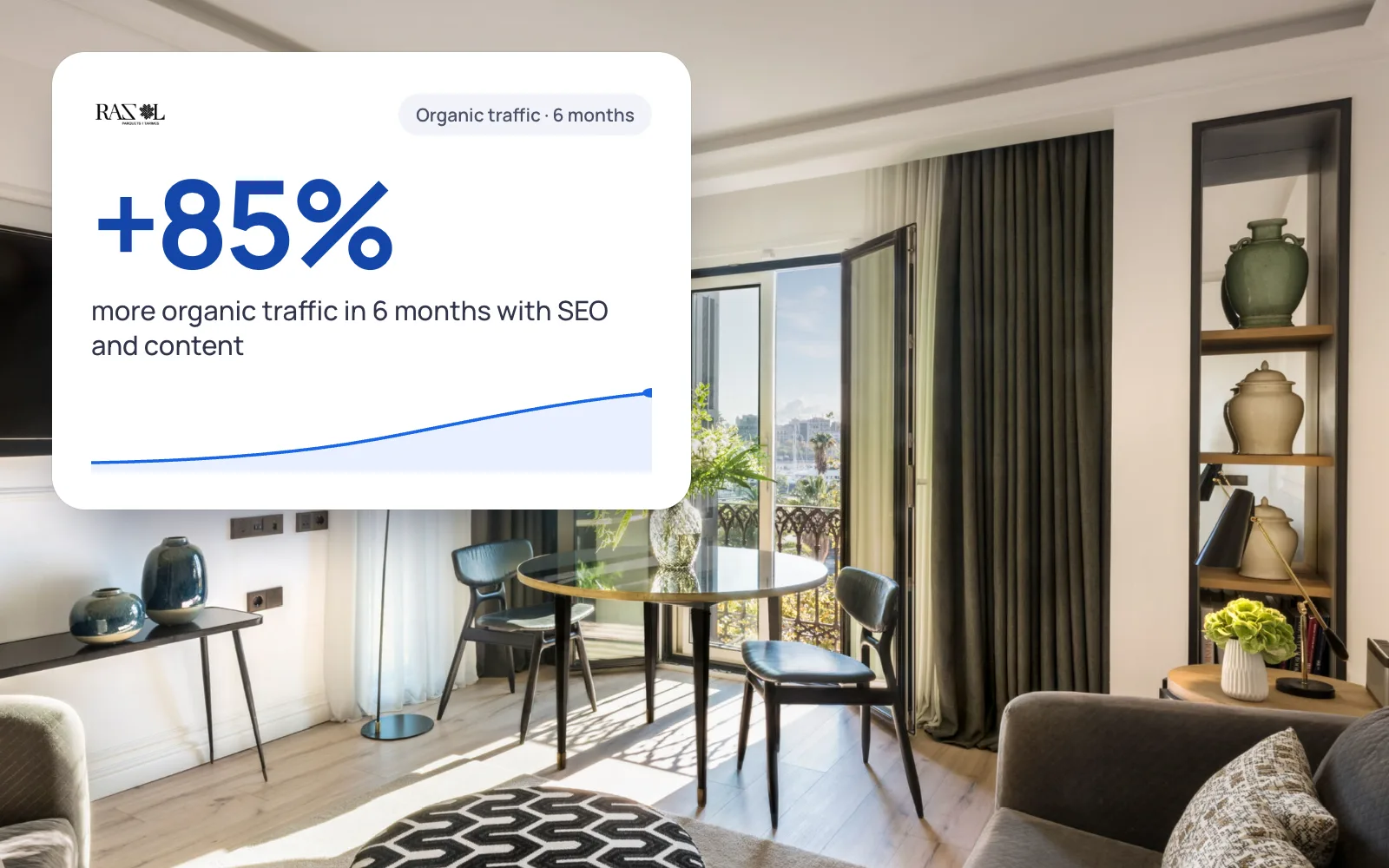 A real case+85%organic traffic in 6 monthsRazol Parquet · See the project →
How to measure link building
The typical mistake is measuring the number of links. What matters is whether the right links are reaching the pages you want to rank and whether that shows up in clients.
| What to look at | Where | How often |
|---|---|---|
| Websites linking to you and pages receiving links | Search Console, Links report | Monthly |
| Visits arriving through those links | Google Analytics 4, referral traffic | Monthly |
| Ranking of the pages receiving links | Search Console, Performance report | Monthly |
| Enquiries and calls | Forms, calls and Analytics | Monthly |
| Manual actions | Search Console, Security and manual actions | Quarterly |
 Real exampleSEES ProductionAn editorial online presence for a high-end audiovisual production company.+140% time on siteSee the project →
The Search Console Links report is free and gives Google’s point of view, although it shows a sample rather than every link. Tools such as Semrush, Ahrefs or Moz provide authority metrics (Authority Score, DR, DA) that are useful for comparing websites with each other, but they are those companies’ own calculations: Google does not use them. Do not choose a link just because it has a high number.
Think in months. A link does not show the next day: Google has to crawl the website linking to you and reassess your page. For Razol Parquet we combined keyword strategy, technical improvements and link building, and organic traffic rose by 85% in 6 months. It was the sum of everything, not the links alone.
Do it yourself or delegate it
You are better placed than anyone to get links from associations, suppliers and clients, because the relationship is yours. An agency adds value in choosing which pages need authority, preparing linkable content and talking to the media.
At our SEO agency in Barcelona, link building is part of the SEO work: local press, partnerships, suppliers, associations and sector directories. We do not buy link packages or use blog networks.
If your business lives off Google Maps, we work on it together with local SEO in Barcelona. You will find the fees in SEO prices: from €150/month with no tie-in.
We'll send you our next SEO guide
What's changing in Google and what works for our clients, explained for small businesses. No spam.
Guides for your business, in your inbox
What we publish on websites, SEO, ads and AI for small businesses. No spam, unsubscribe in one click.
Frequently asked questions
What is link building?
It is the work of getting links from other websites to yours. Google uses those links to discover pages and to judge how much trust they deserve, so links from relevant websites help you rank better, especially in competitive sectors.
What is a backlink?
It is the same as an inbound link: a link on another website that points to one of your pages. Backlink is the term most used in SEO. Links between pages of your own website are called internal links and are something else.
How many links does my website need?
There is no set figure. It depends on how many the websites ranking ahead of you for your searches have. For a local business, a few good links from its sector and its area usually make more difference than many from unrelated websites.
Is buying links illegal?
It is not illegal, but it goes against Google’s spam policies if the link passes authority to manipulate rankings. If you pay to appear on a website, the link should carry rel="sponsored". If it does not, you risk Google ignoring it or a manual action.
Are nofollow links any use?
Yes, though in a different way. Google treats them as a hint, not an instruction, and they can bring you visits and clients. A nofollow link from a local outlet your client reads is worth more than a follow link from a website nobody visits.
How long does link building take to show results?
Usually months. Google has to crawl the website linking to you and reassess your page, and the effect adds to the rest of your SEO. If your website has technical problems or weak pages, links deliver much less.
What is a PBN?
A private blog network: several websites, often built on expired domains, that exist only to link to others and pass them authority. It is a form of link spam under Google’s policies and can end in a penalty.
How do I know who links to my website?
In the Google Search Console Links report you can see the websites that link to you most, the pages that receive most links and the most used link texts. It is free. Tools such as Semrush or Ahrefs give more detail, with their own metrics that Google does not use.
Further reading
Who links to your website today?
Ask for the free SEO audit. We review your website and within 24 hours tell you what is holding back your SEO and where we would start.