
Off-page SEO: what it is and what you can do outside your website to rank
Off-page SEO brings together the signals from outside your website that help Google decide how much to trust it: links from other websites, mentions of your brand, reviews and your Google Business Profile, consistent business details in directories (NAP), social media and press coverage. On-page SEO works on your website from the inside; off-page, on your reputation. You need both.
1 / 11What off-page SEO is
Off-page SEO is everything that happens outside your website and influences how Google sees you: who links to you, who talks about you, what your reviews say and whether your details match everywhere. You can have the best website in your sector and stay on page 2 because nobody else backs it up. Here is the complete map, what matters most for a small business in Barcelona or the Maresme and how to tell whether you are making progress.
What off-page SEO is
Off-page means “outside the page”. It is the part of SEO that does not depend on what you write on your website, but on what others say about you. Google does not rely only on what a website says about itself: it also looks at whether there are websites, media, customers and directories backing it up.
An example. Two physiotherapy clinics in Vilassar de Mar have similar websites, with good service pages. One has 15 reviews, appears on the website of the athletics club it sponsors and is listed in the directory of its professional association.
The other only has its website. If both answer the search equally well, Google has more reasons to show the first one.
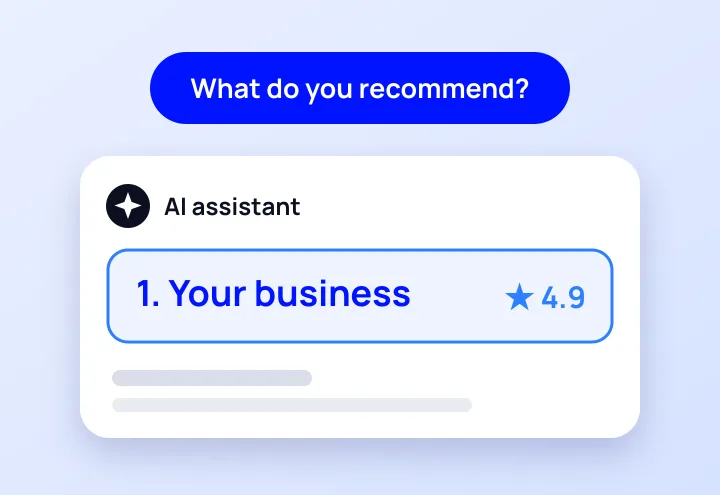
These are the pieces of off-page SEO and what each one contributes:
| Piece | What it is | What it contributes |
|---|---|---|
| Links | Other websites linking to yours | Authority in Google’s standard results |
| Brand mentions | Websites and media that name you, with or without a link | Reputation and searches for your brand |
| Reviews and Google Business Profile | Your business profile and what your customers think | Position on the map and the trust of the person choosing |
| NAP citations | Your name, address and phone in directories | Google confirming that your details are correct |
| Social media | Your profiles and what gets shared | Visibility, traffic and brand searches |
| Digital PR | News and media appearances | Links and mentions from websites that carry weight |
On-page and off-page SEO: how they differ
On-page SEO is everything you do inside your website: copy, titles, headings, keywords, internal links, images. Off-page SEO is what happens outside. The first tells Google what each page is about; the second, whether others trust it.
| On-page SEO | Off-page SEO | |
|---|---|---|
| Where it is done | On your website | On other websites, Google Maps, media and social media |
| Who controls it | You, one hundred per cent | You have influence, but others decide |
| What it answers | What is this page about? | Does it deserve trust? |
| Pace | Changes show within weeks | It is built over months |
| Example | Creating a page for “bathroom renovation in Mataró” | Your bathroom supplier linking to you as an installer |
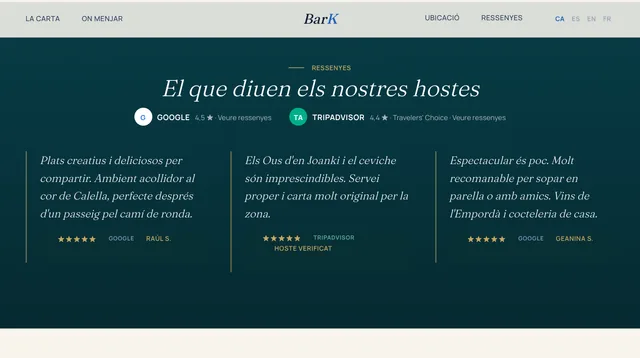
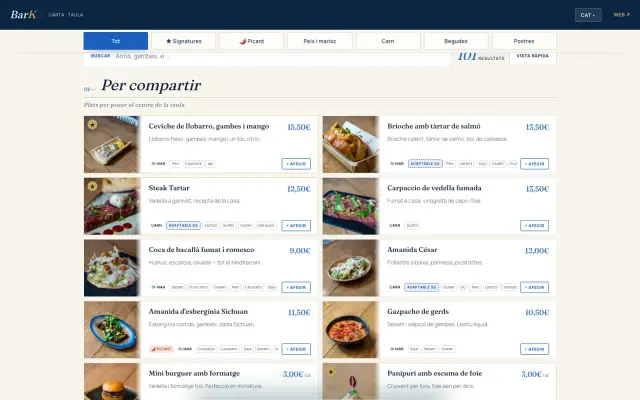
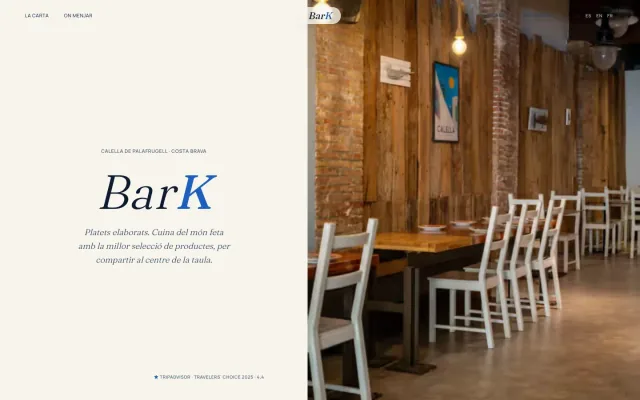 Real exampleBark CalellaMultilingual website and interactive digital menu for a small-plates restaurant on the Costa Brava.4.5★ average rating on GoogleSee the project →
The order matters: on-page first, then off-page. Getting links to a website that Google does not index or that does not explain what you do properly is wasted effort. If you want to see how they fit with the technical side, you will find it in what SEO is and how it works.
Links: the best-known piece
Links from other websites are still one of the signals Google uses to assess a page. Not all of them are worth the same: one from a website in your sector or your area, with real visits and within a text that talks about you, counts for more than dozens from unrelated websites.
For a small business, the healthiest links come from relationships it already has: the trade association, suppliers, customers, the town council, sponsorships or the local press. What you must avoid is buying them: it goes against Google’s spam policies.
We explain how to get them one by one, what to avoid and how to measure them in our link building guide.
Brand mentions
A mention is when a website, a media outlet or a forum names your business, even if it does not link to it. A travel blog that writes “we had dinner at Can Something in Calella and we will be back” is mentioning that restaurant.
Google has not said that a mention without a link counts as a link, so it should not be sold as a ranking factor. But it has clear effects:
- More people search for your name on Google after reading about you, and you almost always win those brand searches.
- Verifiable reputation. The guidelines Google gives its quality raters ask them to research what independent sources say about a website or a business. Those raters do not decide rankings, but they show what Google wants to reward.
- AI answers. ChatGPT, Gemini and Google’s AI summaries build their answers from what they find on many websites. If nobody talks about you outside your website, it is hard for them to cite you. We explain it in how to appear in ChatGPT.
To find your mentions, search Google for your brand in quotation marks and set up a free alert with Google Alerts. If a website names you without linking, ask politely for the link to be added: it is the easiest request to accept.
 Real exampleSEES ProductionAn editorial online presence for a high-end audiovisual production company.+140% time on siteSee the project →
Reviews and Google Business Profile
For a local business, this is the part of off-page SEO that matters most. Google Business Profile help explains that map results depend on relevance, distance and prominence, and that prominence is also based on what Google knows about your business across the web, such as links, articles and directories. It adds that the number of reviews and their rating influence local ranking.
In practice: a complete, verified profile, genuine and recent reviews, and replies to all of them, including the negative ones. What you cannot do is offer discounts or gifts in exchange for reviews, or ask only happy customers for them: Google Maps policy prohibits it.
You will find the step-by-step in what local SEO is.
If you live off customers in your area, this is the first front to work on, before links. It is what we do in our local SEO in Barcelona service.
NAP citations: the same details everywhere
NAP stands for name, address and phone number. A citation is any place where those details of your business appear: directories, town guides, booking platforms, your professional association.
Google checks that information against your profile and your website. If it matches, it reinforces that your business exists and is where you say it is.
The typical problem in the Maresme is relocation. A garage that moved from Mataró to Argentona three years ago still appears with the old address in five directories and with a phone number that no longer exists in two others. Google receives contradictory details and the customer calls a dead number.
- Decide on a single way of writing your name, address and phone number, and use it the same way everywhere.
- Search Google for your business by name, by the old phone number and by the previous address to see where you still appear.
- Correct or claim those listings. Start with the ones that get visits: town guides, sector directories, booking or quote platforms.
- Check that you do not have two Google Business Profiles for the same business.
You do not need to be in a hundred directories. You need to be listed correctly in the ones that matter to your customers.
Social media: what it contributes and what it does not
There is a lot of confusion here. The links you post on Instagram, Facebook or LinkedIn are usually marked so that they do not pass authority, and Google spokespeople have said on several occasions that likes and followers are not a ranking factor. Having 5,000 followers does not move you up on Google.
What social media does for your off-page SEO is indirect, but real:
- It gets your content to people who then link to it or mention it, such as a local journalist or an association.
- It generates searches for your brand: people who see you on Instagram then search for you on Google.
- Your profiles usually appear when someone searches for your name, and they take up results with information you control.
If your time is limited, prioritise your Google Business Profile and reviews over posting daily on social media. For most local businesses it pays off more.
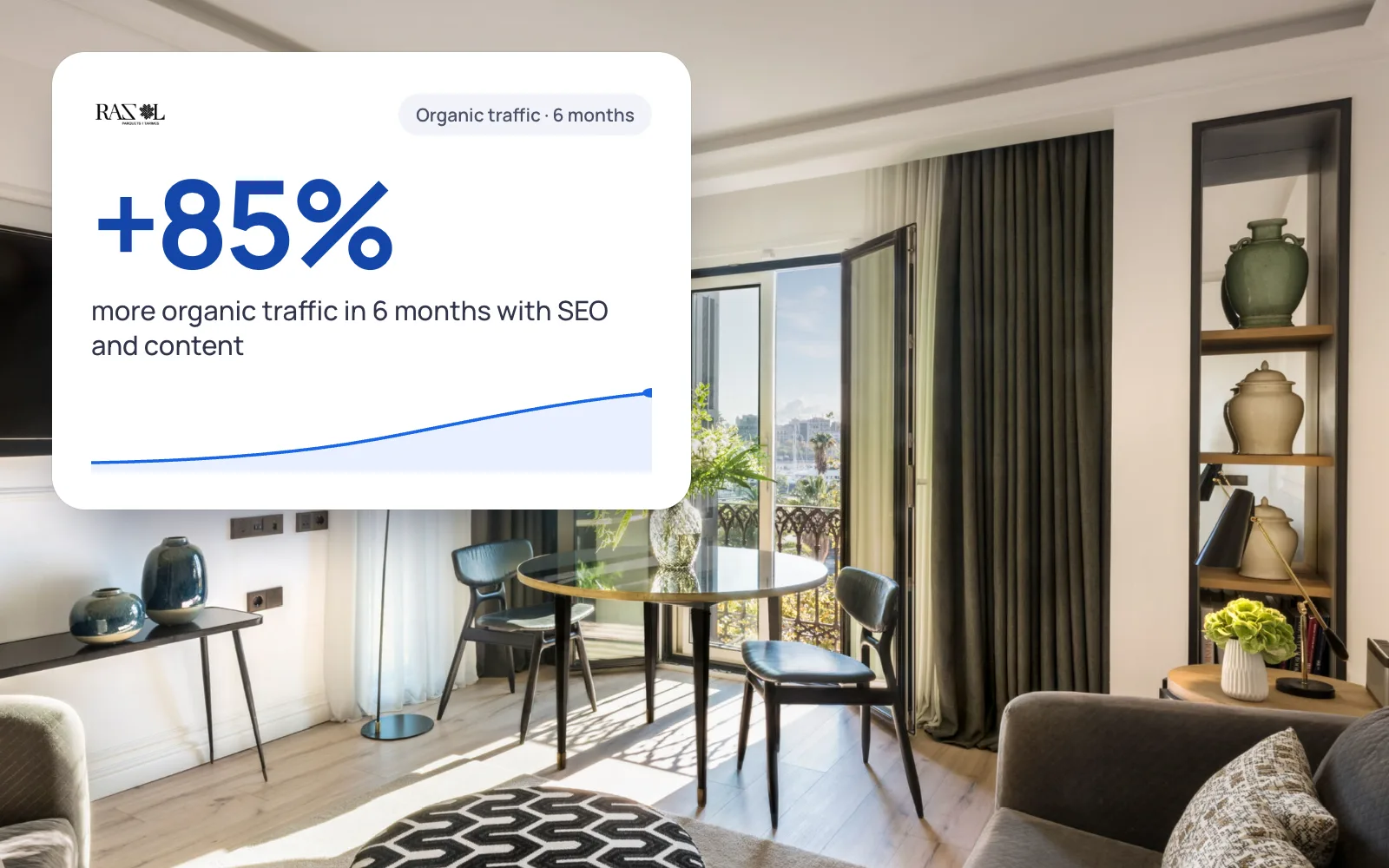 A real case+85%organic traffic in 6 monthsRazol Parquet · See the project →
Digital PR
It is the online version of getting into the newspaper: getting media and websites with an audience to talk about you because you have something to say. A media appearance gives you a link or a mention, visits and credibility all at once.
For a small business there is no need to appear in a national newspaper; local media and those in your sector are more within reach and their audience is closer to your customers.
What usually makes the news
- Your own data: “the average price of a kitchen renovation in the Maresme this year”, if you really have it.
- Milestones: anniversaries, new premises, hiring in the town.
- Expert opinion: a lawyer from Badalona explaining in a local outlet a regulatory change that affects residents.
- Initiatives in the town: open workshops, collaboration with local organisations, sponsorships.
If you are offered a sponsored article in a media outlet, it may make sense for the visibility, but the link should be marked as sponsored. Paying for a link that passes authority without marking it falls under what Google considers link spam.
How to measure off-page SEO
There is no single “authority” number that tells you how you are doing. What works is looking at several signals every month and watching the trend:
| Signal | Where you see it |
|---|---|
| Websites linking to you | Search Console, Links report |
| Searches for your brand | Search Console, filtering the queries that contain your name |
| Calls, directions and clicks from your profile | Google Business Profile performance |
| Number and rating of reviews | Your Google Business Profile |
| Visits from other websites and social media | Google Analytics 4, referral and social traffic |
| New mentions | Google Alerts and searching for your brand in quotation marks |

Tools such as Semrush or Ahrefs give each website an authority score. They are useful for comparing yourself with the competition, but they are their metrics, not Google’s. In the end, what counts is whether the pages that matter move up and whether more enquiries come in.
Where to start with off-page SEO
For a local business in Barcelona or the Maresme, this order usually delivers results sooner:
- A complete, verified Google Business Profile, with a system for asking for reviews (direct link and a QR code on the counter).
- Identical NAP details on your website, your profile and the directories you are already in.
- Links that are already yours by right: trade association, other associations, suppliers and sponsorships.
- Unlinked mentions that you can turn into links.
- One news story or piece of original content per quarter for local media and websites in your sector.
If you would rather a team handled it, at our SEO agency in Barcelona we work on off-page SEO together with the website and the content, without buying links. Fees start at €150/month, with no tie-in; you will find the details in SEO prices.
We'll send you our next SEO guide
What's changing in Google and what works for our clients, explained for small businesses. No spam.
Guides for your business, in your inbox
What we publish on websites, SEO, ads and AI for small businesses. No spam, unsubscribe in one click.
Frequently asked questions
What is off-page SEO?
It is the part of SEO that is done outside your website: links from other websites, mentions of your brand, reviews and your Google Business Profile, business details in directories, social media and media appearances. It helps Google decide how much to trust your website.
What is the difference between on-page and off-page SEO?
On-page SEO is done inside your website: copy, titles, headings and internal links. Off-page happens outside: links, mentions and reviews. On-page tells Google what your page is about; off-page, whether others back it up. You need both.
Which is more important, on-page or off-page SEO?
On-page first, because without a website that Google can read and that answers the search, links are not much use. In competitive sectors, when several websites answer equally well, off-page is what usually breaks the tie.
Does social media count for SEO?
Not directly: links from social media do not usually pass authority and followers do not raise rankings. It does help indirectly, because it gives your content visibility, generates searches for your brand and makes it easier for others to mention or link to you.
Are Google reviews off-page SEO?
Yes, and for a local business they are among the things that matter most. Google Business Profile help says that the number of reviews and their rating influence local ranking. They are also the first thing people look at when comparing businesses on the map.
What are NAP citations?
They are appearances of your name, address and phone number on other websites, such as directories or town guides. If they match your Google Business Profile and your website, they reinforce that your details are correct. If they do not match, they confuse Google and your customers.
How long does off-page SEO take to show?
Months. Reviews and a well-completed profile show sooner on the map; links and mentions take longer, because Google has to discover them and reassess your website. That is why it is worth starting early and being consistent.
Can you do off-page SEO without buying links?
Yes, and it is the recommended way. Buying links that pass authority goes against Google’s spam policies. Links and mentions from associations, suppliers, the local press and sponsorships are earned without paying for the link, and they are the ones that make most sense for a small business.
Further reading
What does the internet say about your business?
Request the free SEO audit. We look at your website and your Google Business Profile and in less than 24 hours we tell you what we would change first.